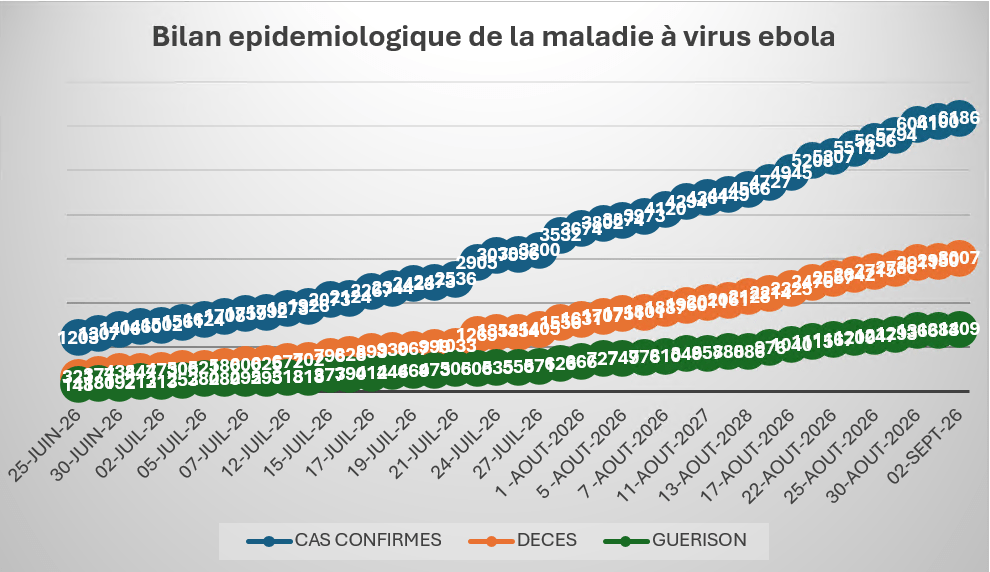
Ebola Statistics
Press release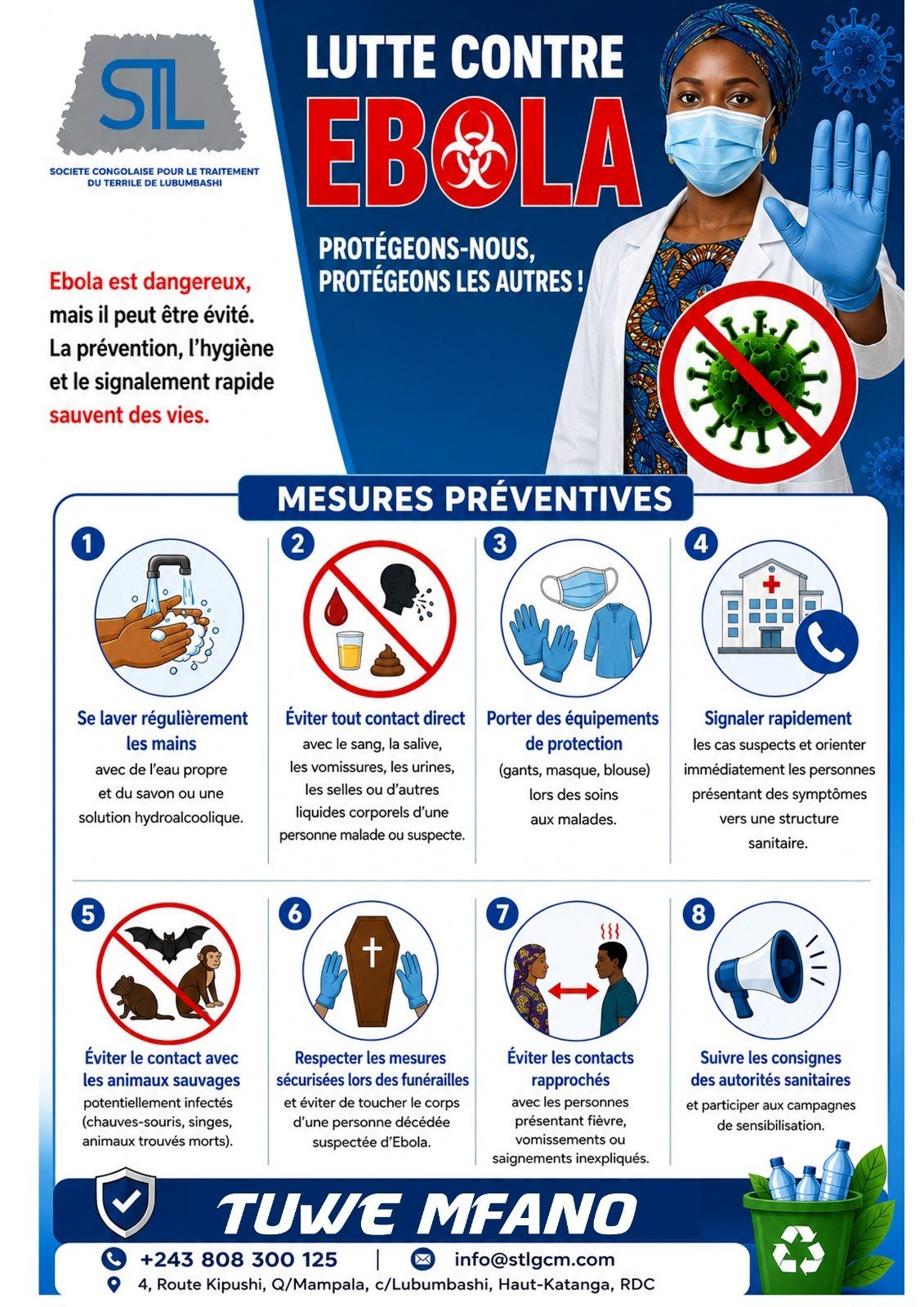
The Ebola Epidemic in the DRC: Understanding Transmission and Barrier Measures
The Democratic Republic of the Congo (DRC) continues to face significant public health challenges due to recurrent outbreaks of the Ebola Virus Disease (EVD). Ebola is a severe, often fatal illness, making widespread public awareness of how it spreads and strict adherence to preventive measures absolutely vital to saving lives and halting epidemics.
1. How the Virus Spreads (Contagion)
Ebola is highly contagious, but it is not airborne (it does not spread through the air like flu or COVID-19). Instead, it spreads through specific, direct pathways:
-
Direct Contact with Bodily Fluids: Transmission occurs when broken skin or mucous membranes (like the eyes, nose, or mouth) come into contact with the blood, secretions, or other bodily fluids (such as vomit, sweat, saliva, urine, and semen) of an infected, symptomatic person.
-
Contaminated Objects: The virus can survive on surfaces. Touching clothing, bedding, needles, or medical equipment contaminated with infected fluids can easily transmit the disease.
-
Animal-to-Human Spillover: Initial infections often occur through contact with the blood, fluids, or meat of infected wild animals, such as fruit bats, monkeys, or chimpanzees (often referred to as bushmeat).
-
Deceased Individuals: The bodies of those who have died from Ebola remain highly infectious. Traditional burial practices involving direct contact with the deceased are major drivers of rapid community transmission.
2. Critical Barrier Measures to Follow
To protect yourself, your family, and the community, the following strict barrier measures must be implemented immediately during an outbreak:
-
Practice Frequent Hand Hygiene: Wash hands regularly and thoroughly with soap and clean water, or use an alcohol-based hand sanitizer.
-
Avoid Direct Physical Contact: Eliminate handshakes, hugs, and close contact with anyone showing symptoms of Ebola (such as high fever, severe headache, muscle pain, vomiting, diarrhea, or unexplained bleeding).
-
Never Touch Bodily Fluids: Avoid handling the vomit, blood, sweat, or urine of a sick individual without professional-grade Personal Protective Equipment (PPE).
-
Ensure Safe and Dignified Burials: Never touch the body of a person suspected or confirmed to have died from Ebola. Always rely on trained, specialized medical teams to handle funeral arrangements safely.
-
Consume Safe Food: Avoid handling or eating wild animals. Ensure all meat is thoroughly and properly cooked before consumption.
-
Isolate and Report Symptoms Immediately: If you or someone you know shows signs of Ebola, isolate the individual immediately and contact local health authorities or visit the nearest healthcare center. Early supportive care drastically improves survival rates.